


If you have ever wondered about sadaqah vs zakat, you are not alone. Many people use the word “charity” for both. But in Islam, these two forms of giving are not the same. One is a required act of worship for eligible Muslims. The other is a voluntary act of kindness that can happen any day, in many forms.
That difference matters in real life. You may want to help a family after a crisis, donate during Ramadan, or figure out whether your yearly giving counts as zakat. This guide breaks it down in simple terms. By the end, you will know what zakat and sadaqah mean, who can receive them, when each should be given, and how to decide what fits your situation.
Quick Answer: What Is the Difference?
Zakat is an obligatory payment for eligible Muslims.It is commonly 2.5% of qualifying wealth. It becomes due when wealth reaches the nisab threshold and stays there for one lunar year. It must be given to specific recipient categories named in Qur’an 9:60.
- Sadaqah is voluntary. It has no fixed amount or schedule. It can go to a wider range of people in need and can also include non-cash acts of kindness.
A simple rule helps: If zakat is due, pay zakat first. If you want to give more at any time, give sadaqah too.
What Is Zakat?
Zakat is one of the Five Pillars of Islam. It is not optional for Muslims who meet the conditions. It is a form of worship and a way to purify wealth while supporting people in need.
In practical terms, zakat is usually calculated as 2.5% of qualifying wealth. This often includes things like savings, gold, silver, and certain investments. But exact calculations can vary, so many people use a trusted zakat calculator or ask a qualified scholar about their personal case.
Who usually has to pay zakat?
Zakat is generally due when:
- A Muslim owns qualifying wealth above the nisab threshold.
- That wealth stays at or above nisab for one lunar year.
- The assets fall into categories that are zakatable.
Two simple terms to know
- Nisab: the minimum amount of wealth that makes zakat due.
- Hawl: owning qualifying wealth for one lunar year.
Practical example: Imagine someone has savings above the nisab amount and those savings remain above that level for a full lunar year. In that case, zakat becomes part of their yearly obligation.
Why zakat matters
Zakat is personal worship, but its impact is social. It helps move wealth toward people in need. Transparent Hands, citing a UNDP-related estimate, notes that zakat could potentially contribute US$200 billion to US$1 trillion globally if organized effectively. That figure shows why zakat is not just private giving. It can be a serious tool for social support when done properly.
What Is Sadaqah?
Sadaqah is voluntary charity given for the sake of Allah. Unlike zakat, it is not tied to a threshold, a yearly cycle, or a fixed percentage. You can give sadaqah whenever you want, in any amount.
That flexibility is one reason many people love it. Sadaqah lets you respond to real needs right away.
Why sadaqah feels more flexible- Sadaqah can be:
- A small donation after hearing about an urgent need
- A bag of groceries for a struggling neighbor
- Clothing for a family in hardship
- Ongoing support for a local cause
- A simple act of help or kindness
Some sources on Islamic giving also note that sadaqah can include non-monetary acts such as kind words, helping someone, or even a smile. That makes it part of daily life, not just formal donation.
Practical example: A student may not have enough savings to owe zakat, but they can still buy food for a neighbor, support a fundraiser with a small amount, or volunteer time. That is sadaqah.
What makes it powerful
Sadaqah builds a habit of generosity. It reminds us that helping others is not only a once-a-year duty. It can be part of ordinary life.
Sadaqah vs Zakat: 6 Key Differences. This is where most readers want a clear answer.
The table below gives a quick comparison.
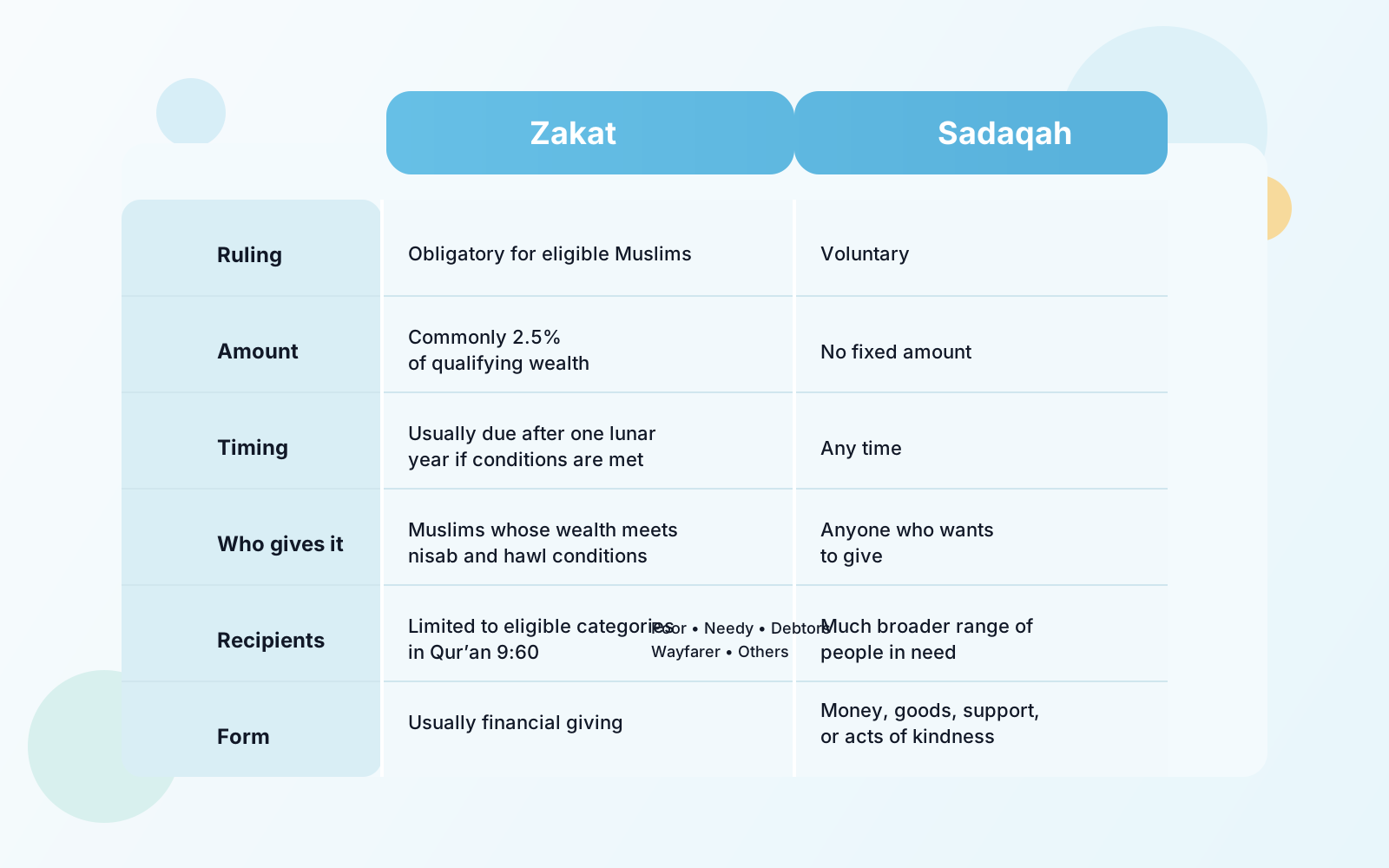
The difference between zakat and sadaqah in plain language. If you want the simplest possible explanation, it is this:
- Zakat is a duty and Sadaqah is extra generosity.
Both are valuable. But they are not interchangeable.
Real-life example - A family may calculate and pay zakat once a year because it is due. The same family may also give sadaqah during Ramadan, after a natural disaster, or when a local family loses income. One fulfills an obligation. The other expresses ongoing compassion.
Who Can Receive Zakat and Sadaqah? This is one of the most important parts of the decision.
Who can receive zakat?
Zakat has stricter rules. It must be distributed to one of the eight categories named in Qur’an 9:60. For a broad guide like this, the key point is simple: zakat is not a general donation fund that can be sent anywhere.
Commonly discussed eligible recipients include:
- The poor
- The needy
- Other recognized categories under Islamic guidance
Because the rules can be detailed, it is wise to check trusted guidance before assigning zakat to a cause or organization.
Who can receive sadaqah?
Sadaqah is much more flexible. It can go to a wider range of people in need. Sources used for this article note that it may also be given to non-Muslims in need.
Sadaqah may support:
- An individual in crisis
- A hungry family
- A local food drive
- Emergency relief
- Community support projects
- Daily acts of care and kindness
Practical example
Suppose you want to support a neighborhood pantry that serves anyone facing hardship. That may be a strong sadaqah option. If you want to give zakat, you should first make sure the distribution clearly meets zakat recipient rules.
When Should You Give Zakat or Sadaqah?
Choose zakat when… Give zakat when:
- Your qualifying wealth is above nisab
- You have held it for one lunar year
- You are fulfilling your yearly obligation
- You want the funds distributed according to zakat rules
Choose sadaqah when…Give sadaqah when:
- You want to help right away
- Your wealth does not meet nisab
- You want flexible giving
- You want to support a cause outside zakat categories
- You want to give more after paying zakat
Can sadaqah replace zakat?
No. If zakat is due, sadaqah does not replace it.
This is a common point of confusion. Giving generously all year is a good thing, but voluntary charity does not cancel an obligation. A person can and often should do both: pay zakat when due and continue giving sadaqah as they are able.
A simple decision guide for common situations
1. My savings stayed above nisab for a full lunar year.
Your first question should be zakat. Calculate what is due on qualifying assets.
2. I want to help a family after a sudden job loss.
Sadaqah is often the easiest fit because it can be given immediately and flexibly.
3. I already paid zakat this year, but I want to give in Ramadan too
That extra giving is sadaqah.
4. I am young and do not have enough wealth for zakat
You can still give sadaqah, even if it is small.
5. I want to support a public cause but I am not sure it qualifies for zakat.
If you are unsure, use sadaqah or ask a qualified scholar before using zakat funds.
Common Questions About Zakat and Sadaqah
Is Sadaqah the same as zakat?
No. Both are forms of giving in Islam, but zakat is obligatory for eligible Muslims, while sadaqah is voluntary.
Who has to pay zakat?
Muslims whose qualifying wealth reaches the nisab threshold and remains there for one lunar year generally need to pay zakat.
Who can receive zakat?
Zakat must go to eligible categories named in Qur’an 9:60. It cannot be treated as unrestricted charity.
Can sadaqah be given to non-Muslims?
Yes, many scholars and practical charity guides allow sadaqah to be given to non-Muslims in need because sadaqah is broader and more flexible than zakat.
How do I know if I meet nisab?
You will need to review your qualifying assets and compare them to the nisab threshold. Because personal finances vary, a trusted zakat calculator or a qualified scholar can help.
Can I give both zakat and sadaqah?
Yes. In fact, that is often the most complete approach: fulfill your zakat duty if it is due, then continue with sadaqah whenever you can.
Why This Difference Matters
Understanding the difference between zakat and sadaqah helps you give with confidence. It helps you fulfill religious duties correctly. It also helps your support reach the right people in the right way.
More than that, it creates a healthy mindset. Zakat teaches responsibility. Sadaqah builds everyday generosity. Together, they create a balanced approach to giving: one rooted in duty, and one powered by compassion.
Zakat and sadaqah both matter, but they serve different roles. Zakat is an obligation for eligible Muslims who meet the nisab and one-year holding conditions, and it must go to eligible recipient categories. Sadaqah is voluntary, flexible, and open-ended. If zakat is due, pay it first. Then keep the door open to regular sadaqah, even in small amounts. If you are unsure whether zakat applies to your situation, use a trusted zakat calculator or ask a qualified scholar, then make a giving plan that includes both duty and everyday generosity.